 Text Us
 Legally Reviewed By
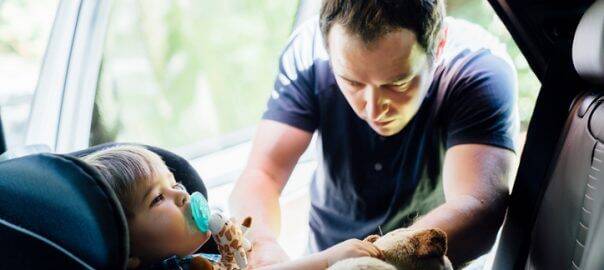
Summer has arrived, and a familiar itch is arising—but it’s not from mosquitoes. It’s the travel bug, and families across the country are preparing for vacations and road trips. If you’re traveling with infants or children, an important part of these preparations is car seats. Before you buckle up, review this history of car seat safety.
A (brief) history of car seat safety:
- Car seats: Car seats have been used since the early 1900s, but it wasn’t until 1962 that seat belts were integrated into the design, courtesy of Leonard Rivkin and Jean Ames. Car companies soon released their own seats, and General Motors became the first to offer different designs for infants and children.
- Laws and regulations: The first car seat and child safety regulation were passed by the National Highway Traffic and Safety Administration (NHTSA) in 1971. However, it wasn’t until 1985 that all states, including the District of Columbia and Puerto Rico, passed child passenger safety laws. Laws now vary by state and must be followed even if travelers are just passing through. Check your state laws, and make sure to follow all guidelines.
- Current statistics: According to a recent study from the NHTSA, 94 percent of parents believe their child’s car seat is installed properly. In reality, the majority of parents install the car seats improperly. Due in part to this, motor vehicle injury is currently a leading cause of death among infant and children. Some of the most common mistakes with car seats are putting a child in a forward-facing seat too soon, having loose harness straps, and a lack of continual inspections or ignoring expiration dates.
- Safety tips: To make sure your car seat is as safe as possible, closely follow car seat installation instructions and consider having a certified Child Passenger Safety Technician inspect it. Instructions and technician locations can both be found at nhtsa.gov. Remember to also register your car seat with the company to get recall alerts. Lastly, consider accessories and toys that will make traveling easier, but not pose a threat in the event of an accident (soft pillows and cloth toys are recommended).
Help keep your family safe and remember these tips. In the event that you or someone you know becomes a victim of an accident, call the Brothers in Law at (757) 599-6050.


Related Posts
-
 Car Accidents6 mins READ
What Happens When You Leave the Scene of a Car Accident in Virginia?
For the person who got hit, though, a driver who flees the scene can turn an already stressful accident into something far more frustrating. You’re left dealing with damage, possibly an injury, and no idea who is responsible or how you’ll pay for the fallout. This article walks through what happens to a driver who...Read More -
 Car Accidents5 mins READ
Where Do Most Car Accidents Happen in Virginia Beach?
Car accidents in Virginia Beach can happen anywhere, but some roads and driving environments consistently see more crashes than others. From busy corridors and highway interchanges to residential streets and commercial areas, different parts of the city present different risks. In this article, we’ll look at some key Virginia Beach car accident statistics, which areas...Read More -
 Car Accidents5 mins READ
Should I Get a Lawyer for a Minor Car Accident?
Car accidents are often described as “minor” when vehicle damage appears limited, no one reports a serious injury at the scene, or the crash seems relatively straightforward. But “minor” is not a formal legal or medical classification, and the true impact of an accident may not be immediately clear. In 2025, Virginia recorded 67,757 property...Read More