 Text Us
 Legally Reviewed By
Table of Contents
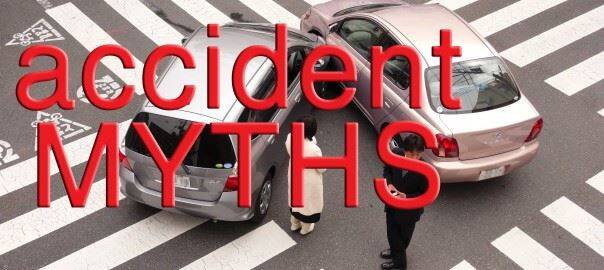
Being injured in a car accident is bad enough but the many myths surrounding these types of cases makes it all the more complicated. Learn about the top 5 most common car accident myths and misconceptions. Courtesy of HG.org
MYTH #1: EACH STATE’S AUTO INJURY LAWS ARE THE SAME
Insurance rates are regulated by state-run agencies and vary widely from state to state. Some states require that you purchase liability insurance, some do not. Some states have no-fault law, while others have at-fault laws. No-fault laws tend to be widely misinterpreted by residents who find the details of who pays for what fairly confusing.
No-fault in its simplest terms means that regardless of fault, a car accident victim is entitled to certain benefits. For example, a person’s own auto insurance company pays for the economic loss from his injuries (medical bills and lost wages) after an auto accident, regardless of which driver caused the accident.
At-fault states take into account who was at fault for an accident, and to what degree, when determining what each person (and their insurance companies) will pay for injuries and property damage.
All of these factors affect an auto accident case including settlement offers, jury verdicts and even appeals.
MYTH #2: I CAN COLLECT PAIN AND SUFFERING DAMAGES SIMPLY FROM BEING IN PAIN
Some states have specific requirements that an injured car accident victim must first pass before she can recover non-economic (pain and suffering) damages from any automobile accident. This means that being in pain is not enough to receive compensation beyond your limited economic damages such as medical bills and lost wages. In order to qualify for additional non-economic damages in some states, the injured party has to have suffered any of the three types of injuries:
- Death
- Permanent serious disfigurement
- Serious impairment of body function
Explore our articles on car accidents to find valuable information about accident statistics and a step-by-step guide on what to do after a car accident.


Related Posts
-
 Car AccidentsPersonal Injury4 mins READ
Huffman & Huffman celebrates child passenger safety week
Every parent and caregiver wants to do everything possible to protect the children in their care. As a firm with multiple parents, child safety and well-being are always at the front of our mind, especially when traveling by car. Child Passenger Safety Awareness Week is September 20–26, with Saturday, September 26 recognized as National...Read More -
 Car Accidents6 mins READ
What Happens When You Leave the Scene of a Car Accident in Virginia?
For the person who got hit, though, a driver who flees the scene can turn an already stressful accident into something far more frustrating. You’re left dealing with damage, possibly an injury, and no idea who is responsible or how you’ll pay for the fallout. This article walks through what happens to a driver who...Read More -
 Car Accidents5 mins READ
Where Do Most Car Accidents Happen in Virginia Beach?
Car accidents in Virginia Beach can happen anywhere, but some roads and driving environments consistently see more crashes than others. From busy corridors and highway interchanges to residential streets and commercial areas, different parts of the city present different risks. In this article, we’ll look at some key Virginia Beach car accident statistics, which areas...Read More