 Text Us
 Legally Reviewed By
Table of Contents
Every parent and caregiver wants to do everything possible to protect the children in their care. As a firm with multiple parents, child safety and well-being are always at the front of our mind, especially when traveling by car.
Child Passenger Safety Awareness Week is September 20–26, with Saturday, September 26 recognized as National Seat Check Saturday. It is an important reminder to check that every child is riding in the right car seat, booster seat, or seat belt and that the restraint is installed and used correctly every trip.
Child Passenger Safety Statistics
Motor vehicle crashes remain a leading cause of death for children. In 2024, 677 children under age 14 were killed while riding in passenger vehicles, and more than 127,000 were injured. That is an average of about two child deaths and 349 child injuries each day.
Proper restraints make a meaningful difference. NHTSA reports that 39% of children killed in car crashes in 2024 were unrestrained. Car seats and booster seats are designed to protect children based on their size and developmental stage, but they can only do their job when they are selected, installed, and used properly.
For infants younger than 1 year old, correctly used child restraints reduce the risk of fatal injury by 71%. For children ages 1 through 4, correctly used restraints reduce the risk of fatal injury by 54% in passenger cars.
Child Passenger Safety Laws
Virginia law requires children to be properly secured in a child safety seat or booster seat through age 7, until their eighth birthday. The restraint must meet federal safety standards and must be used according to the manufacturer’s instructions and applicable height, weight, and age limits.
Virginia also requires children to ride in a rear-facing safety seat until they are at least 2 years old, or until they reach the minimum weight limit specified by the manufacturer for a forward-facing seat. Rear-facing seats must be placed in the back seat whenever a back seat is available.
A rear-facing car seat should never be placed in front of an active passenger air bag. If a vehicle does not have a back seat, a child restraint may be placed in the front passenger seat only when there is no passenger air bag or when the air bag has been deactivated.
Although Virginia’s child-restraint requirement changes when a child turns 8, that does not automatically mean the child is ready to use an adult seat belt alone. A booster seat may still be necessary until the lap and shoulder belt fit properly.
Choosing the right child safety seat
Use your child’s age, weight, and height to choose the proper child safety seat, and make sure your seat has not passed its expiration date or been in an accident. Infants and young children should ride in a rear-facing car seat, toddlers should ride in a forward-facing safety seat with a 5-point harness, and older children who have outgrown their front-facing car seat should ride in a booster seat.
Some seats are designed to convert from rear-facing to front-facing, and others are all-in-one seats. To use an adult seat belt, children must be at least 4 feet 9 inches tall and at least 8 years of age.
The NHTSA has a tool that can help you find and compare car seats using your child’s date of birth, height, and weight. Once you purchase a car seat, register it, and sign up for recall notices to ensure you receive important safety updates.
Installing your child safety seat and proper restraints
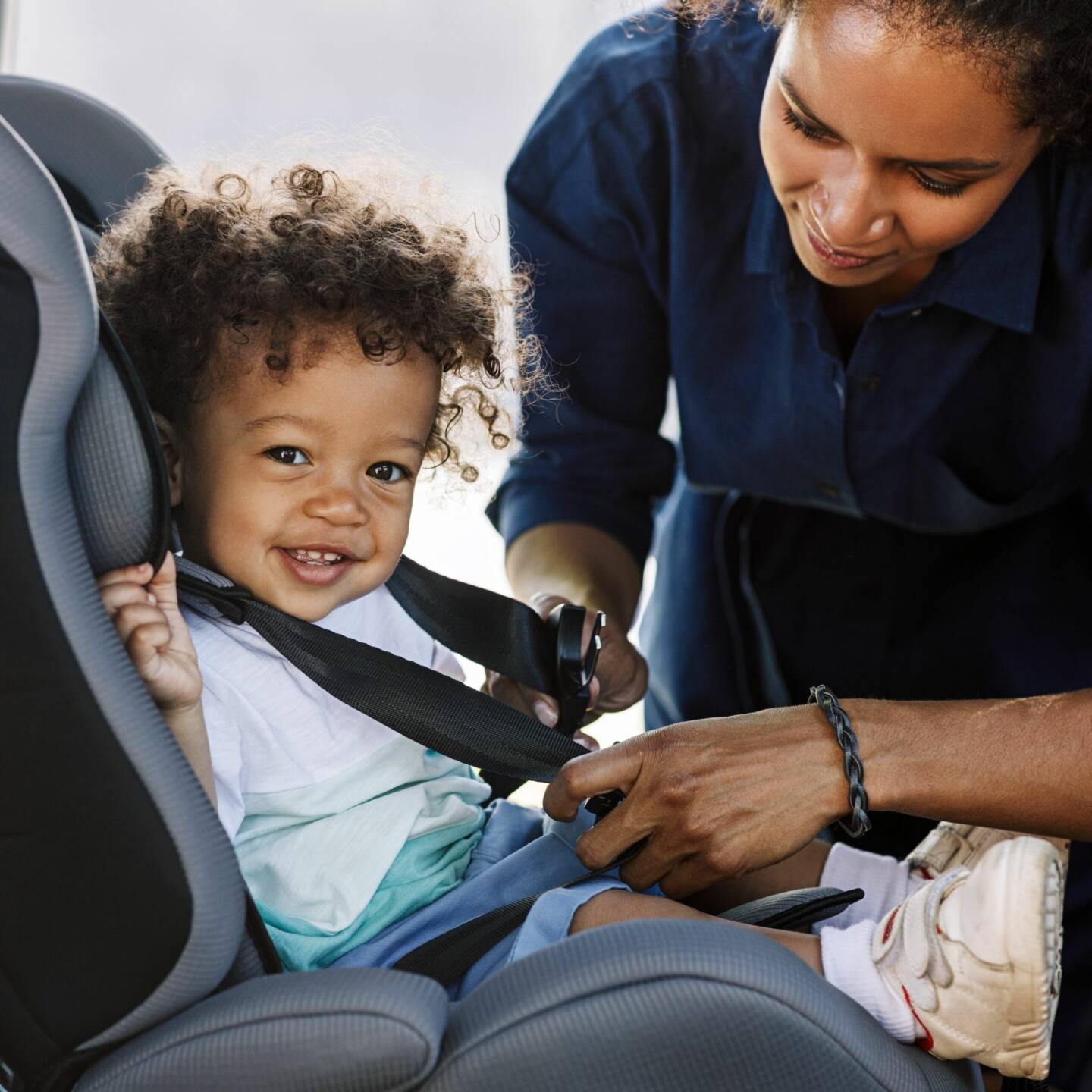
Whether your child uses a rear-facing safety seat or an adult seatbelt with a booster, be sure to install restraints properly. Tight straps do more than just keep a child snug in the car seat! For harness straps, the shoulder straps should start slightly BELOW the child’s shoulders on rear-facing car seats and start slightly ABOVE the shoulders for forward-facing seats. The chest clip should always be positioned right at the child’s armpits. For boosters, the adult seatbelt should lie snugly across the shoulder and chest and snugly across the upper thighs.
To install a car seat properly, you will need to know about vehicle parts and seat parts. The NHTSA and Safe Kids Worldwide provide explanations and instructional videos, and you can even ask an expert for help.
Anyone who drives young children in the car – including parents and grandparents – should know how to handle and install child safety seats properly. You can find events, inspection stations, and nationally certified Child Passenger Safety Technicians (CPST) across the United States. You can also check with your local fire department to see if they have staff that is trained to help assist in checking that your child safety seat is properly installed.
What happens to children in car accidents?
Even when a child is properly restrained, a collision can be frightening and potentially life-changing. Children may suffer injuries that are not immediately obvious, including head injuries, neck injuries, internal injuries, broken bones, and emotional trauma.
If you or your child was injured in a crash caused by another person’s carelessness, it is important to understand your legal rights and options. Depending on the circumstances, compensation may be available for medical expenses, future care needs, lost income, pain and suffering, and other losses.
At Huffman & Huffman Brothers-in-Law, P.L.L.C., we have helped injured individuals and families throughout Hampton Roads since 1973. Our attorneys can review your situation, explain your options, and help you pursue the compensation you may be entitled to receive.
To schedule a free consultation, call (757) 599-6050 or contact us online. We are available 24 hours a day and serve clients throughout Hampton Roads and the surrounding Virginia communities.


Related Posts
-
 Car Accidents6 mins READ
What Happens When You Leave the Scene of a Car Accident in Virginia?
For the person who got hit, though, a driver who flees the scene can turn an already stressful accident into something far more frustrating. You’re left dealing with damage, possibly an injury, and no idea who is responsible or how you’ll pay for the fallout. This article walks through what happens to a driver who...Read More -
 Car Accidents5 mins READ
Where Do Most Car Accidents Happen in Virginia Beach?
Car accidents in Virginia Beach can happen anywhere, but some roads and driving environments consistently see more crashes than others. From busy corridors and highway interchanges to residential streets and commercial areas, different parts of the city present different risks. In this article, we’ll look at some key Virginia Beach car accident statistics, which areas...Read More -
 Car Accidents5 mins READ
Should I Get a Lawyer for a Minor Car Accident?
Car accidents are often described as “minor” when vehicle damage appears limited, no one reports a serious injury at the scene, or the crash seems relatively straightforward. But “minor” is not a formal legal or medical classification, and the true impact of an accident may not be immediately clear. In 2025, Virginia recorded 67,757 property...Read More