 Text Us

 Legally Reviewed By

Table of Contents
Walking should be a safe way to get around, but pedestrian crashes continue to affect families across Virginia. According to DRIVE SMART Virginia’s annual report, which cites Virginia DMV data, 138 pedestrians died on Virginia roadways in 2025. Nationwide, 7,080 pedestrians were killed in traffic crashes in 2024—a 3.9% decrease from 2023, but still a devastating loss of life
Drivers and pedestrians both play a role in making our roads safer. Understanding Virginia’s crossing laws, staying alert, and practicing safe habits can help reduce the risk of serious pedestrian accidents.
Virginia’s Pedestrian Laws
Pedestrians do not automatically have the right of way in every situation. Virginia law establishes responsibilities for both people crossing the road and drivers approaching them.
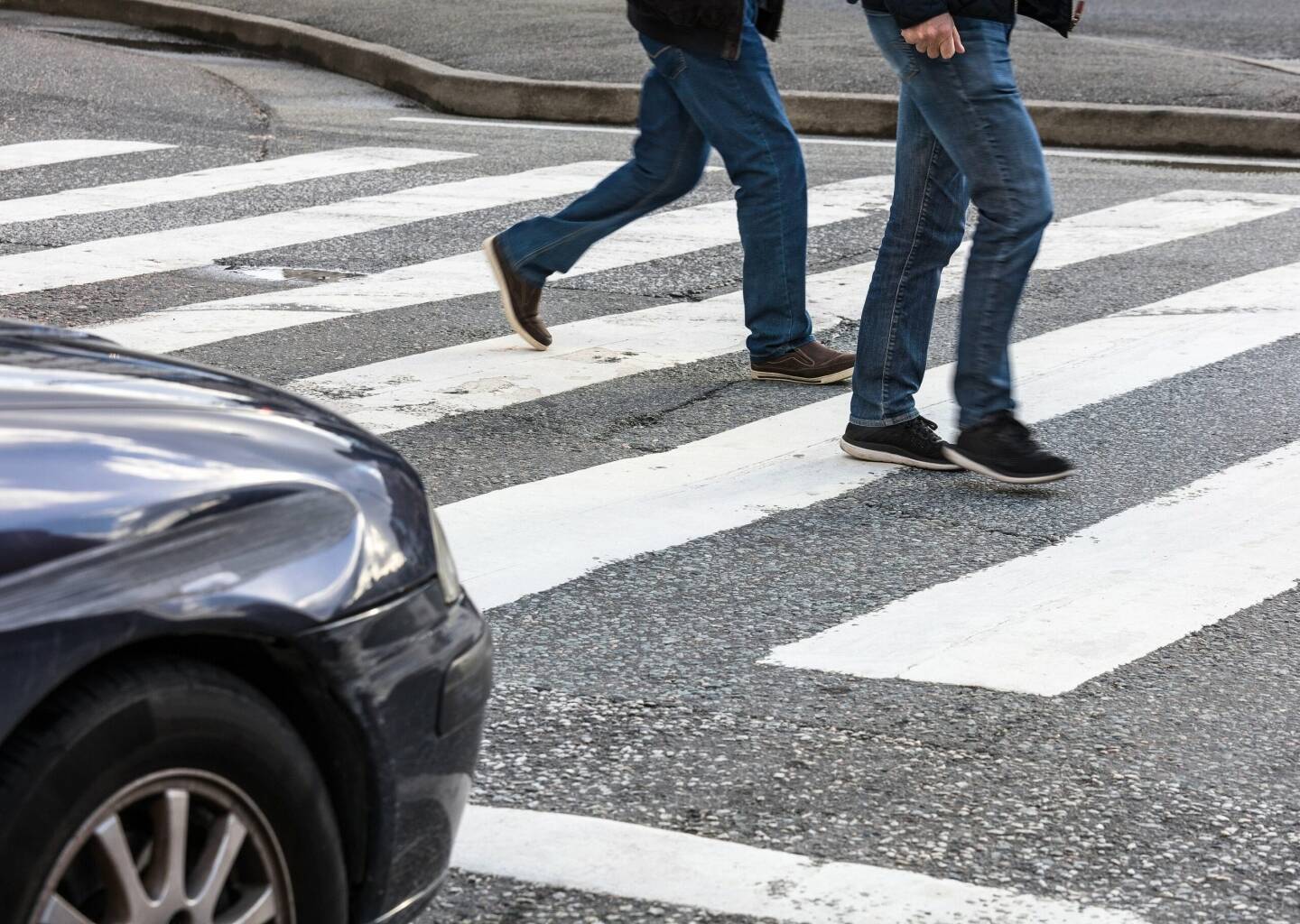
Under Virginia Code § 46.2-924, drivers must stop when a pedestrian is in their lane—or in an adjacent lane and approaching their lane—at the following locations:
-
Clearly marked crosswalks, including those at midblock.
-
Regular pedestrian crossings at the end of a block that extend the boundaries of an adjacent sidewalk, even without painted crosswalk markings.
-
Intersections where the driver is approaching on a road with a speed limit of 35 mph or less.
Drivers must remain stopped until the pedestrian has passed their lane. Other drivers approaching from behind or in an adjacent lane may not pass a vehicle stopped for a pedestrian under this law. Where traffic signals or law-enforcement officers control traffic, drivers must follow those directions.
Pedestrians must also follow crossing signals. A “WALK” signal allows pedestrians to begin crossing and gives them the right of way. A “DON’T WALK” signal means they should not start crossing, although someone who began crossing on “WALK” should continue to a sidewalk or safety island. Drivers turning at intersections must give pedestrians crossing the roadway the right of way.
Virginia generally requires pedestrians to use reasonably suitable, passable sidewalks rather than walk in the roadway. When roadway walking is necessary, pedestrians generally must face oncoming traffic. Current law includes a limited exception for divided highways without shoulders, where pedestrians may walk along the extreme right edge regardless of the direction of traffic.
Crashes Outside a Crosswalk
Crossing outside a marked crosswalk does not automatically make a pedestrian at fault. Virginia Code § 46.2-923 directs pedestrians to cross at intersections or marked crosswalks wherever possible, but it does not impose the blanket prohibition described in the original article. It also states that, where intersections have no marked crosswalks, crossing at an intersection or between intersections by the most direct route does not, by itself, establish negligence as a matter of law.
However, pedestrians must not carelessly interfere with traffic or enter an intersection in disregard of approaching vehicles. They also must not step into the roadway between intersections where a parked vehicle or another obstruction prevents approaching drivers from seeing them.
Determining responsibility for a pedestrian crash requires examining the circumstances, including the crossing location, visibility, traffic controls, and the actions of everyone involved. An investigation can help establish what happened and whether an injured pedestrian has a claim.
Safety Facts and Tips
NHTSA’s 2024 national data highlight why pedestrian safety remains important:
-
7,080 pedestrians died in traffic crashes.
-
Pedestrians accounted for 18% of all traffic fatalities.
-
On average, a pedestrian was killed every 74 minutes and injured every seven minutes.
Whether you’re walking, biking, or driving, these habits can help protect everyone sharing the road.
For pedestrians
-
Use sidewalks when available. When there is no sidewalk, choose a route that keeps you as far from traffic as possible.
-
Cross at intersections or crosswalks whenever possible, and obey pedestrian signals.
-
Look for traffic in every direction, including vehicles turning or backing out of driveways. Never assume a driver sees you.
-
Put away distractions and stay alert while walking and crossing.
-
Wear reflective materials and carry a flashlight or blinking light after dark.
-
If no crosswalk or intersection is available, choose a well-lit location with a clear view and wait for enough time to cross safely.
For cyclists
-
Follow traffic signs and signals, and ride in the same direction as traffic.
-
Wear a properly fitted helmet and use lights and reflectors to improve visibility.
-
Make your movements predictable and signal turns.
-
When using a sidewalk or shared-use path, be courteous to pedestrians, give an audible warning before passing, and watch for vehicles at crossings and driveways.
For motorists
-
Stay focused, follow speed limits, and slow down in areas with heavy pedestrian activity.
-
Stop for pedestrians as required by Virginia law, and never pass another vehicle stopped for a pedestrian.
-
Look carefully for pedestrians and cyclists before turning or backing up.dmv.virginia+1
-
Give cyclists at least three feet of clearance when passing. If the lane is too narrow to provide that space, Virginia law requires drivers to change lanes; wait until passing is safe.
Help After a Pedestrian Accident
If you or a loved one has been injured in a pedestrian accident, Huffman & Huffman Brothers-in-Law, PLLC can help you understand your legal options. Our Virginia pedestrian accident attorneys help injured people and their families investigate crashes and pursue compensation.
Schedule a free consultation to discuss what happened and learn how our team may be able to help.


Related Posts
-
 Bike AccidentsPedestrian AccidentsPersonal Injury4 mins READ
5 Summer safety tips for families
As temperatures rise and the days grow longer, families naturally spend more time outdoors enjoying everything the season has to offer. With kids out of school and schedules shifting, summer often brings more opportunities for travel, recreation, and time outside together. From pool days and beach trips to bike rides, playground visits, vacations, and neighborhood...Read More -
 Car AccidentsDog BitesPedestrian AccidentsPersonal InjuryPremises LiabilitySlip and Fall Accidents4 mins READ
Injured While Delivering? What DoorDash, Instacart, and Gig Drivers Need to Know
Over the last decade, gig work has become a convenient way for many Americans to earn income. Platforms like DoorDash, Instacart, Uber Eats, and Amazon Flex allow people to set their own hours, making it easier for those with family commitments or other jobs to manage their busy schedules. However, while delivery driving is a great option...Read More -
 Bike AccidentsCar AccidentsDog BitesPedestrian AccidentsPersonal InjuryPremises LiabilitySlip and Fall Accidents5 mins READ
Can I Make a Personal Injury Claim if My Injuries Are Not Serious?
Can I Make a Personal Injury Claim if My Injuries Are Not Serious? Handling the aftermath of an accident can be challenging, particularly when your injuries appear minor. Many people mistakenly believe that only severe injuries warrant a personal injury claim. However, soft tissue injuries can still lead to considerable pain, interfere with your daily...Read More